


Is Surfing a Difficult Sport?
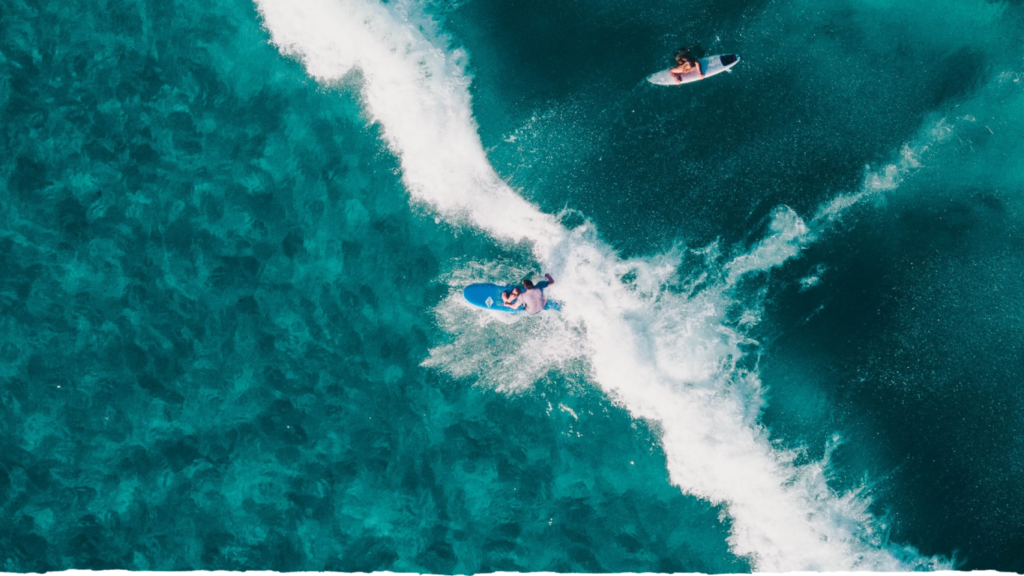
At first glance, surfing might seem simple: a board, the sea, and the desire to catch waves. But it only takes one attempt to realize that there is much more behind this sport than meets the eye. After all… is surfing a difficult sport?
The short answer is: yes… and no.
Surfing is demanding. It requires balance, coordination, physical strength and, above all, patience. Unlike many other sports, it doesn’t depend only on us. It depends on the ocean, wind conditions, the tide and, of course, the waves. This makes every session unique, unpredictable and, at times, frustrating.
But there is an essential point that often goes unnoticed: although it may seem random, the surfing experience is far from being just a matter of luck. In fact, everything depends on a fundamental triad: the surfer, the gear, and the sea.
It is in the relationship between these three elements that a positive or negative experience is defined. When balance exists, surfing becomes fluid, progressive, and incredibly addictive. It’s that feeling of gliding on a wave—of feeling the sea push the board as if you were levitating. The good news? We have more control over this equation than we think.
For example, when someone is taking their first steps, or when the sea presents more demanding conditions, it makes perfect sense to opt for larger boards with more volume. This type of equipment offers greater stability, makes balancing easier, and significantly increases the odds of success in the very first attempts. On the other hand, once a surfer has developed a good take-off technique and a consistent base position, smaller boards become more appropriate. These allow for greater maneuverability and control on the wave, opening doors to more technical and dynamic progression.
It is based on this logic that we structure our lessons at Azores Surf Holidays. The choice of location and gear is not made by chance. It is thought out in detail so that every practitioner has the best possible experience, in safety and with real progression. But this is only truly effective when there is careful individual assessment.
Everyone is different: experience levels, physical abilities, confidence in the sea… it all counts.
And that is why lessons with groups that are too large tend to fail. The greater the diversity within the group, the harder it becomes to guarantee an experience adjusted to each person’s needs. Unfortunately, many come to us after bad experiences.
Some decided to venture out alone, renting a board and entering the sea without any prior knowledge. Others even had lessons, but without a proper assessment or the right choice of gear and conditions.
The result? Frustration, insecurity and, often, the wrong idea that “surfing isn’t for me.” But the truth is different.
Surfing is an inclusive sport; it really is for everyone. We’ve had practitioners from ages 5 to 80, and all were able, in their own way, to have a successful experience. When the surfer, gear, and sea triad is aligned, everything transforms into an accessible, progressive, and deeply rewarding experience. Ultimately, it’s not just about facing the sea, but about learning to interact with it in the right way.
When everything aligns, surfing stops feeling difficult and transforms into a fluid, natural, and unforgettable experience. And that is when everything changes.
How about moving from theory to practice and feeling all of this for yourself? Sign up for our lessons now!